
Navigating the 36-Month Florida Property Insurance Appraisal Rule
Why Florida Condo Boards Can’t Afford to Ignore the 36-Month Appraisal Rule
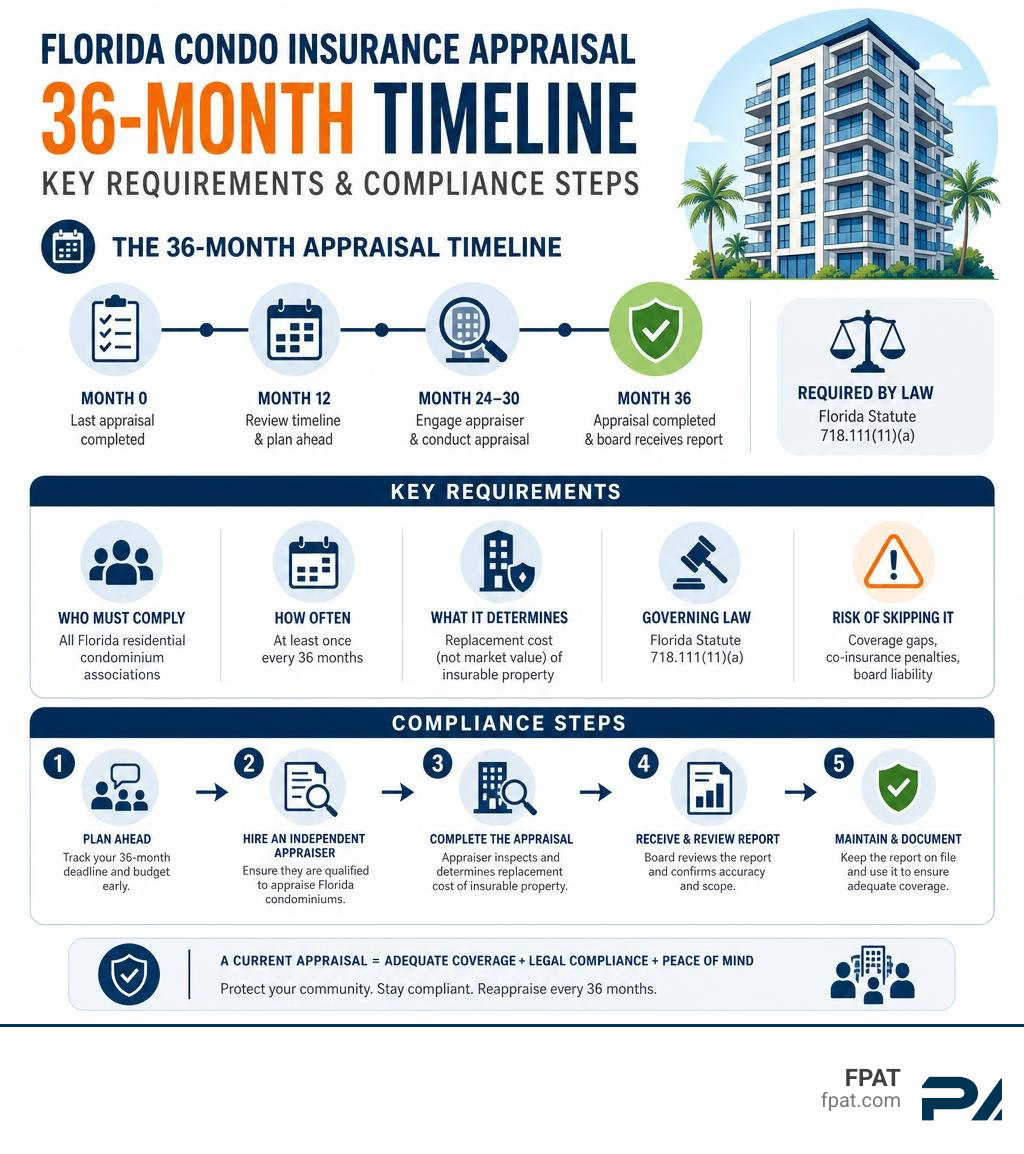
Insurance appraisal for condo associations in Florida is legally required — not optional. Under Florida Statute 718.111(11)(a), every residential condominium association must obtain an independent insurance appraisal to determine the replacement cost of its property at least once every 36 months.
Here’s what that means in plain terms:
| Key Fact | Detail |
|---|---|
| Who must comply | All Florida residential condominium associations |
| How often | At least once every 36 months |
| What it determines | Replacement cost (not market value) of insurable property |
| Governing law | Florida Statute 718.111(11)(a) |
| Risk of skipping it | Coverage gaps, co-insurance penalties, board liability |
Florida’s insurance market has become one of the most challenging in the country. Premiums have surged. Carriers have left the state. Construction costs have climbed as much as 20% in recent years. And post-Surfside reforms have added new compliance layers that boards must navigate carefully.
The stakes are real. A 50-unit Tampa condo with an outdated appraisal can end up undervaluing its structures by 20–30% — leaving a dangerous gap in coverage right when a hurricane hits.
This guide walks you through exactly what the law requires, what a compliant appraisal covers, and how to protect your association in 2026.
I’m Eric Dixon, RS, GCS Class A, a Partner at FPAT with over 20 years of experience delivering insurance appraisals for condo associations across Florida, from high-rise towers to coastal HOAs. In that time, I’ve seen how outdated valuations expose boards to penalties, claim disputes, and personal liability — and I’ll show you how to avoid those pitfalls throughout this guide.
Understanding the Florida Statute 718.111(11) Mandate
To keep your community protected and compliant, you must understand the legal scaffolding behind property valuations. In Florida, the foundational law governing condominium operations is Chapter 718. Specifically, the state legislature uses this statute to mandate that associations carry adequate property insurance to protect the shared investments of all unit owners.
Under this legal framework, statutory compliance is not a matter of guesswork. The law requires that hazard insurance coverage be based on the full replacement cost of the property. To ensure this replacement cost is accurate and defensible, the association must base its coverage limits on an independent valuation. You can read more about the core statutory framework in our Florida Statute 718.111 Appraisal guide, as well as our comprehensive Florida Condo Insurance Appraisal Guide.
The 36-Month Independent Appraisal Cycle
The state of Florida enforces a strict 36-month cycle for these independent valuations. This means your condominium association must obtain a new independent insurance appraisal—or a certified update of a prior appraisal—at least once every three years.
Failing to meet this timeline creates immediate board liability. If a major storm strikes and the association is underinsured because the board relied on a four-year-old appraisal, board members can be held personally liable for breaching their fiduciary duties. Furthermore, following major safety reforms like Florida Senate Bill 4-D, insurance carriers are scrutinizing compliance records more than ever. If your building is three stories or higher and lacks a fresh appraisal, carriers may refuse to renew your master policy entirely.
Defining ‘Best Efforts’ for Replacement Value
Florida Statute 718.111(11) dictates that boards must use their “best efforts” to obtain and maintain property insurance for the full replacement value of the property. But what does “best efforts” actually mean in a volatile, high-premium insurance market?
If your association faces skyrocketing premiums or limited carrier options, “best efforts” requires you to act in a commercially reasonable manner. You must actively shop the market, work closely with your broker, and document every step of the process.
Most importantly, obtaining a professional, independent replacement cost appraisal provides a legal “Safe Harbor” protection for the board. If the market makes 100% replacement coverage financially impossible, having an up-to-date, professional appraisal proves to regulators, courts, and unit owners that the board acted in good faith based on accurate, objective data.
Insurance Appraisal vs. Lending Appraisal: Key Differences
One of the most common points of confusion for board members is the difference between various valuation methods. When a bank or a real estate agent talks about an appraisal, they are almost always referring to a market value appraisal. When we discuss protecting your association’s physical assets, we are talking about a replacement cost appraisal. For a deeper dive into these report styles, check out our Replacement Cost Valuation Reports Guide.
Market Value vs. Replacement Cost Valuation
The primary difference lies in what is being measured and what is excluded:
- Market Value (Lending Appraisal): Focuses on what a buyer is willing to pay for a property in the current real estate market. This valuation includes the value of the land, local market demand, school districts, and historic sales trends. It also factors in physical depreciation.
- Replacement Cost (Insurance Appraisal): Focuses strictly on the cost to rebuild the physical structure from scratch using modern materials and labor. It completely excludes the value of the land, as the land will still exist even if the building is completely destroyed. It also ignores market demand fluctuations and does not deduct for physical wear and tear.
Additionally, ad valorem tax assessments from your local county property appraiser (such as in Miami-Dade, Broward, or Hillsborough counties) are calculated to generate tax revenue. They do not reflect the actual real-world costs of hiring contractors to rebuild a damaged structure.
Why Your Association Needs a Dedicated Insurance Appraisal Condo Florida
Relying on a lending appraisal or a tax assessment for your master policy is a recipe for disaster. Insurance underwriters require a dedicated insurance appraisal condo Florida report because it speaks their language.
A dedicated insurance valuation calculates exact structural quantities, current regional material prices, and localized labor rates. Without this specific report, your association risks setting incorrect policy limits. This leads to two costly scenarios: either you over-insure and waste thousands of dollars in excess premiums, or you under-insure and face massive, un-callable coverage gaps after a catastrophic loss.
Reconstruction Costs vs. New Construction in 2026
When calculating insurance values, we must distinguish between “new construction” and “reconstruction” costs. Rebuilding a damaged property is not the same as building a new master-planned community.
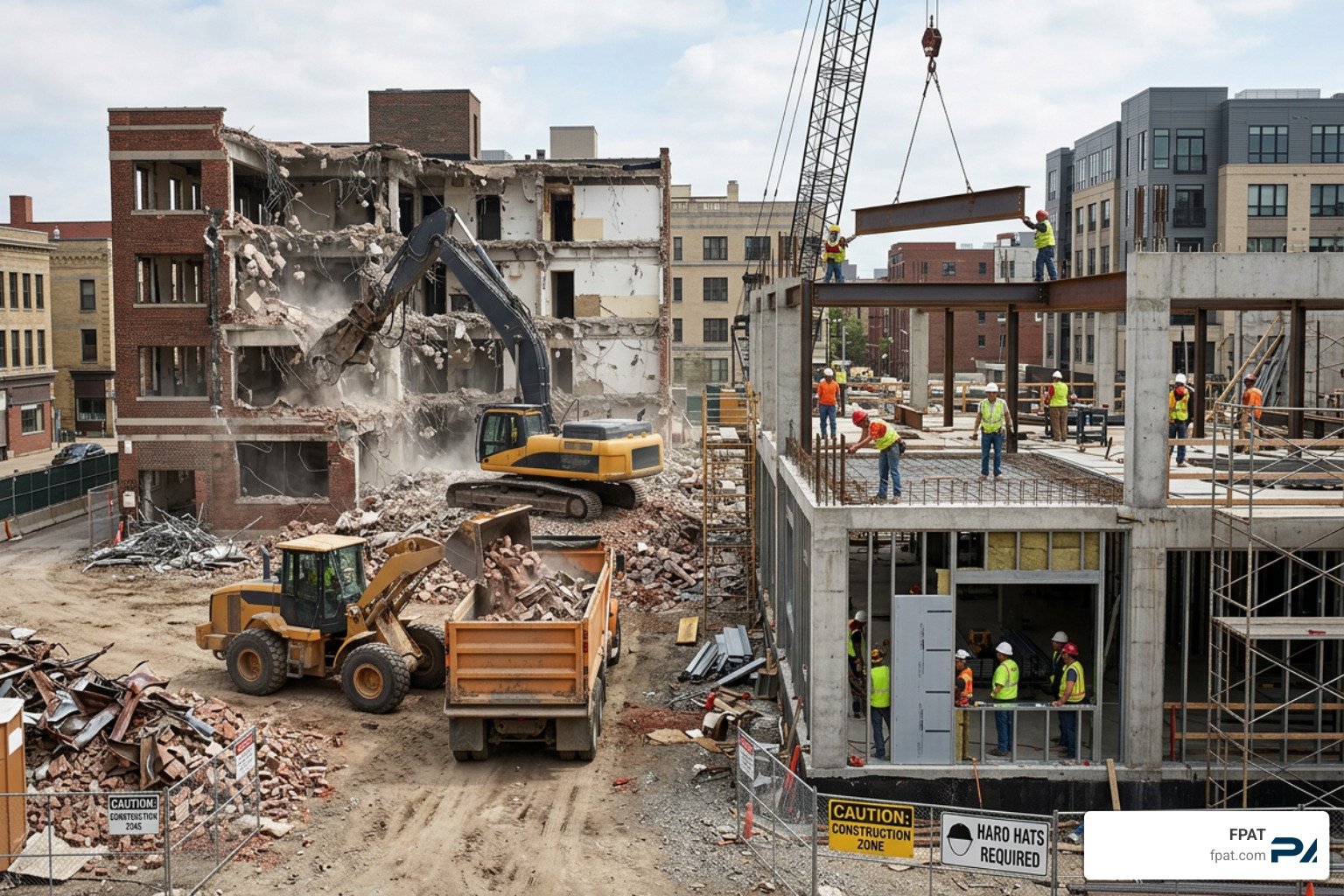
Reconstruction is inherently more expensive due to several real-world factors:
- Demolition and Debris Removal: Before rebuilding can begin, the damaged portions of the building must be carefully demolished and hauled away, which requires specialized labor and permitting.
- Site Access and Logistics: New construction benefits from open, cleared land. Reconstruction often requires working around existing, undamaged structures, landscaping, and tight neighborhood property lines in dense urban areas like Fort Lauderdale, St. Petersburg, or Miami.
- Code Upgrades: If an older building is damaged, rebuilding it requires bringing the entire structure up to 2026 Florida Building Codes, including modern wind-load and electrical standards.
- Post-Disaster Demand Surge: Following a major hurricane, the sudden demand for local contractors, drywall, roofing materials, and concrete causes prices to spike dramatically.
The Co-Insurance Penalty and How to Avoid It
If your association under-insures its property, you risk triggering a co-insurance penalty. Most commercial property policies contain a co-insurance clause (typically 80%, 90%, or 100%). This clause requires you to carry insurance equal to at least that percentage of the actual replacement value of the building.
If a storm hits and your policy limit is lower than the required percentage, the insurance carrier will penalize your payout—even for a partial loss.
For example, if your building’s true replacement value is $10 million, and your policy has a 90% co-insurance clause, you must carry at least $9 million in coverage. If you only carry $6 million (66% of the requirement) and suffer a $1 million roof claim, the carrier will only pay a fraction of that claim, leaving the association to fund the remaining hundreds of thousands of dollars via emergency special assessments.
To learn how to protect your community from this financial trap, read our guide on Co-Insurance Penalty Meaning Florida Condo Guide and use our Florida Condo Co-Insurance Quick Calculator to check your current safety margins.
Cost Factors for an Insurance Appraisal Condo Florida
How much does a professional replacement cost valuation cost in 2026? Pricing depends heavily on the size, height, location, and structural complexity of your community.
Here are the typical cost ranges across our Florida service locations:
- Small Condos or HOAs (10–30 units): $700 – $1,500 (Common in areas like Safety Harbor, Clearwater, and Lakeland)
- Mid-Size Condos (31–100 units): $1,500 – $3,500 (Common in suburbs of Orlando, Tampa, and Jacksonville)
- Large High-Rises or Luxury Coastal Complexes (101+ units): $3,500 – $6,000+ (Typical for high-density coastal areas like Miami, Fort Lauderdale, Naples, and Cape Coral)
Factors that drive these costs include proximity to the coast (which requires specialized wind-zone modeling), the availability of original architectural as-built drawings, and whether auxiliary structures like parking garages, pool decks, and clubhouse facilities must be included in the valuation.
What is Included in an Insurance Appraisal Condo Florida Report?
A legally compliant appraisal is a highly detailed, technical document. It must break down every insurable asset to provide a clear path for underwriters. To better understand the technical jargon found in these documents, you can review our guide on Technical Insurance Appraisal Terms Florida.
Common Elements vs. Unit Interiors
Under Florida Statute 718.111(11)(f), there is a strict division between what the association’s master policy must cover and what individual unit owners must cover via their personal HO-6 policies:
- Master Policy Covers (Common Elements): The building envelope, roof, framing, exterior walls, common area hallways, lobbies, utility conduits, HVAC rough-ins, drywall, and original interior doors.
- Unit Owner Covers (HO-6 Policy): Floor coverings (carpet, tile, wood), wall coverings (paint, wallpaper), ceiling finishes, kitchen cabinets, countertops, appliances, water heaters, and personal belongings.
When we perform an appraisal, we carefully calculate the “insurable reproduction cost” by excluding the unit interior finishes that are the legal responsibility of the individual unit owners. This keeps your master policy accurate and prevents you from paying premiums on items you are not legally responsible for insuring.
HB 913 Updates and SIRS Integration
Legislative updates, including House Bill 913 (HB 913), have reshaped how associations manage their finances. HB 913 extended critical deadlines for the Structural Integrity Reserve Study (SIRS) to December 31, 2025, and raised the cost threshold for reserved items from $10,000 to $25,000.
Crucially, HB 913 allows associations to adopt “baseline funding plans” to prevent massive, sudden spikes in owner dues while ensuring reserves do not fall below zero over a 30-year projection.
Because of these tight links between structural integrity and property value, your 36-month insurance appraisal must be closely integrated with your SIRS data. The physical dimensions, roof age, and structural components analyzed during your insurance inspection form the baseline data for your reserve funding calculations. To see how these two requirements fit together, read our Florida Condo Insurance Appraisal SIRs Guide 2026.
Navigating the FEMA 50% Rule and Flood Insurance
For communities located in designated flood zones (such as coastal areas of Naples, Cape Coral, or Fort Lauderdale), flood insurance is just as critical as windstorm coverage. However, hazard policies and flood policies do not cover the same items.
| Coverage Element | Hazard Insurance (Master Policy) | Flood Insurance (NFIP / RCBAP) |
|---|---|---|
| Building Shell & Roof | Yes | Yes |
| Foundations & Below-Grade | Excluded | Included |
| Unit Interior Finishes | Excluded (by Statute 718) | Included (under FEMA guidelines) |
| Excavation & Underground Piping | Excluded | Included |
Understanding this division is vital because of the FEMA 50% Rule. Under this federal guideline, if a building in a flood zone is damaged by any source (wind, water, or fire) and the cost of repairs exceeds 50% of the building’s market value (excluding land), the entire structure must be brought into full compliance with current local floodplain management regulations. This often means elevating the building or installing expensive floodproofing systems.
To ensure your community is protected, your appraisal must provide separate, defensible actual cash value (ACV) calculations that comply with local building department checklists and the FEMA Substantial Improvement/Substantial Damage Desk Reference.
Maximizing Wind Mitigation Credits
In Florida’s Tier 1 Wind Zones, windstorm premiums make up the largest portion of an association’s budget. To find relief, boards must maximize their wind mitigation credits.
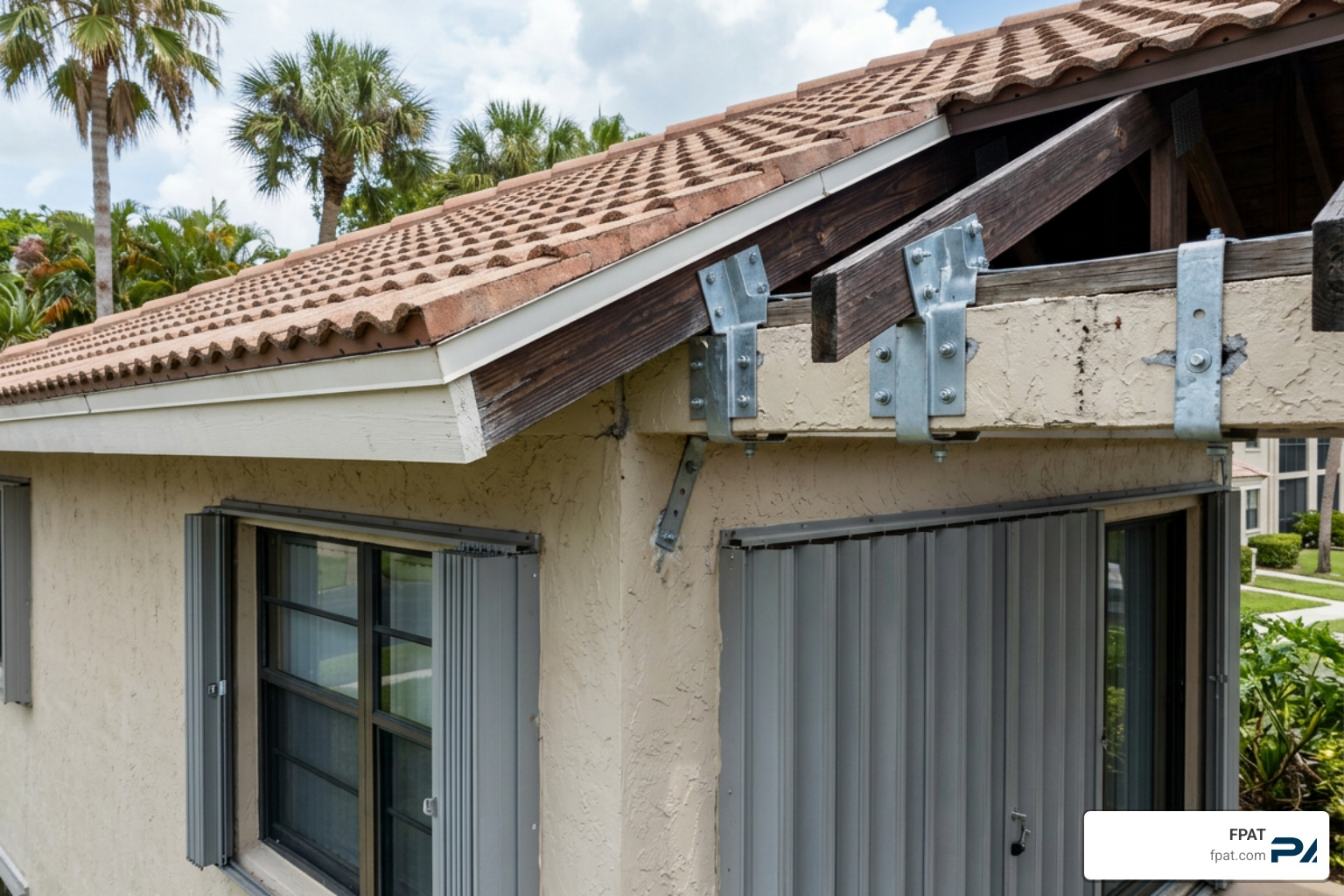
By pairing your insurance appraisal with a formal wind mitigation inspection, you can document structural features that qualify your association for substantial discounts—up to 45% off your windstorm premiums through Citizens Property Insurance and other major carriers.
Underwriters look for specific features:
- Roof-to-Wall Attachments: Double wraps or clips rather than simple toenails.
- Roof Deck Attachment: The spacing and size of nails securing the roof deck.
- Opening Protection: Certified impact-resistant windows, doors, and hurricane shutters on all openings.
To learn how to combine these assessments for maximum savings, see our guide on Insurance Appraisal and/or Wind Mitigation.
What Boards Must Look for in the Final Report
When you receive your final appraisal report, do not just file it away. The board should carefully review the document to ensure it is accurate:
- Check the Inventory: Ensure every auxiliary structure is listed. Are the pool, tennis courts, perimeter fencing, trash enclosures, and outdoor lighting poles included? If they aren’t listed, your carrier won’t cover them.
- Verify the Dimensions: Cross-reference the gross square footage against your original as-built architectural drawings.
- Check for Ordinance or Law Coverage: Ensure the report includes estimated costs for modern code compliance, which is required if your broker needs to secure Ordinance or Law endorsements.
Frequently Asked Questions About Florida Condo Appraisals
Managing a community association requires continuous education. Here are some of the most common questions we hear from board members in our Florida offices. For more details on why these reports are a smart financial investment, read our analysis: Insurance Appraisal Worth It.
How often should we update our appraisal to avoid premium jumps?
While the law only mandates updates every 36 months, we strongly recommend updating your insurance appraisal annually.
Waiting the full three years in a highly volatile construction market can lead to a massive, unexpected jump in your property’s replacement value—and a corresponding spike in your insurance premiums at renewal. Annual desktop updates are 20% to 30% cheaper than full site-visit appraisals, and they allow your board to budget incrementally rather than facing sudden financial shocks.
Can we bundle our insurance appraisal with a wind mitigation inspection?
Yes! Bundling your insurance appraisal, wind mitigation inspection, and your SIRS into a single service package is one of the best ways to save money.
Bundling reduces our travel and administrative costs, and we pass those savings directly to your association. More importantly, it ensures complete data consistency. When the same engineering and valuation experts analyze your property, there is no risk of conflicting measurements or structural descriptions between your insurance policies and your reserve studies.
What happens if our association fails to comply with the 36-month rule?
Failing to comply with the 36-month appraisal mandate carries severe consequences:
- Policy Cancellation or Non-Renewal: Insurance carriers regularly audit association records. If your appraisal is expired, they may refuse to renew your policy.
- Co-Insurance Penalties: If you suffer a loss with an outdated valuation, the carrier can legally reduce your claim payout.
- Loss of Board Safe Harbor: If unit owners sue the board for underinsurance after a storm, board members lose their “best efforts” legal protection and can face personal fiduciary liability.
Conclusion
Navigating Florida’s complex, fast-moving property insurance landscape requires professional expertise, precise data, and proactive planning. With 2026 construction costs remaining high, relying on outdated appraisals or broad national averages is a risk your community cannot afford to take.
At FPAT, we specialize in helping Florida condominium and HOA communities stay fully compliant, adequately protected, and financially secure. From our offices across the state—including Safety Harbor, Tampa, Miami, Fort Lauderdale, Orlando, and Naples—we provide fast, accurate, and independent replacement cost valuations, wind mitigation inspections, and structural reserve studies.
Don’t wait for your insurance renewal deadline or the next storm warning to find out if your community is underinsured. Contact our team today to get a professional, compliant proposal within 24 hours.
Get a Professional Insurance Appraisal