As a Florida condo board member or property manager, you’re responsible for protecting your community’s buildings, finances, and residents—especially with hurricanes, rising construction costs, and strict state rules. One major headache: keeping property insurance adequate without overpaying premiums or risking gaps that could lead to special assessments after a storm.
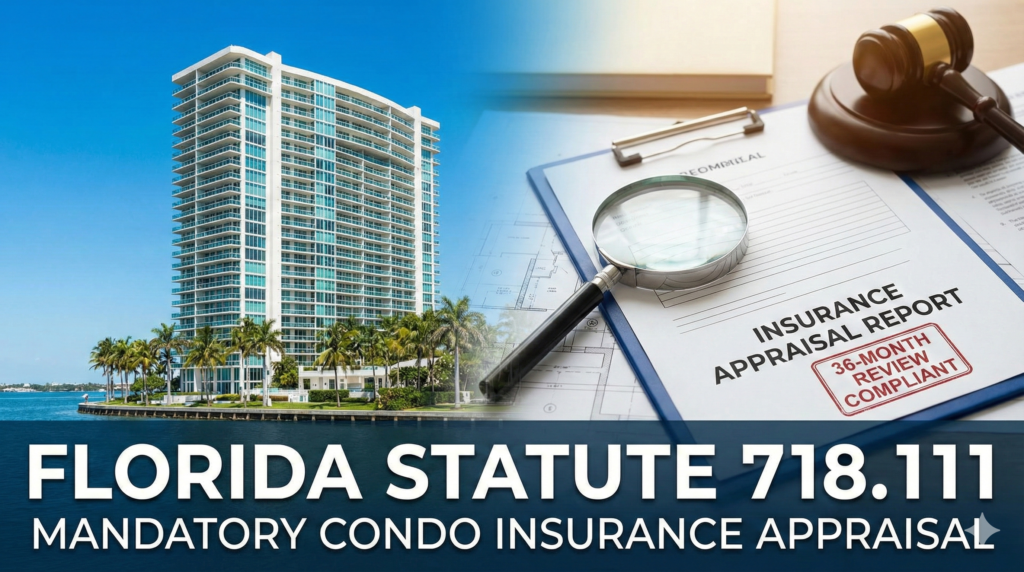
Florida law (Florida Statutes §718.111(11)) requires every residential condominium association to maintain adequate property insurance based on the replacement cost of the insured property. This must come from an independent insurance appraisal or an update of a prior one, refreshed at least every 3 years (36 months). Recent laws like HB 913 (with impacts carrying into 2026) reinforce this, emphasizing “best efforts” to secure full replacement value coverage while allowing flexibility if market conditions limit options.
Why Insurance Appraisals Matter in Florida
- Avoid Underinsurance: Outdated appraisals don’t account for inflation, supply chain issues, or post-hurricane material/labor spikes. Underinsured properties mean uncovered rebuild costs—potentially hitting owners with massive special assessments.
- Satisfy Insurers and Regulators: Carriers demand current replacement cost values to issue or renew policies. Non-compliance risks non-renewal, higher deductibles, or penalties.
- Tie into Reserves and SIRS: Appraisals help align insurance with reserve studies (including Structural Integrity Reserve Studies for taller buildings), ensuring funding matches real rebuild needs.
- Potential Savings: Accurate valuations support wind mitigation credits, flood adjustments, and better premium negotiations.
The pressure feels real: You’re worried about getting the numbers wrong, facing resident complaints over costs, or dealing with insurance surprises alone in Florida’s tough environment. It shouldn’t be this stressful—accurate, compliant appraisals should provide peace of mind that your community is protected.
What Florida Law Requires
Under FS 718.111(11)(a):
- Coverage must cover the replacement cost (cost to rebuild with like-kind materials, per original plans/specs, excluding unit interiors like appliances, flooring, and personal property).
- Determined by an independent appraisal (professional, on-site evaluation—not a quick online guess).
- Updated every 3 years minimum (or sooner if major changes occur, like additions or renovations).
- Associations must show “best efforts” for full coverage; document attempts if full replacement isn’t feasible to avoid issues.
- Deductibles are board-set but must follow industry standards and be disclosed properly.
Appraisals typically include:
- On-site measurements and inspections.
- Detailed descriptions of construction materials, features, and common elements.
- Photos, sketches, and line-item breakdowns.
- Replacement cost estimate (current dollars to rebuild, including code upgrades where applicable).
- Exclusions for unit-owner items.
The Appraisal Process: Simple Steps
- Schedule an Independent Appraiser — Choose a qualified, Florida-experienced professional (often tied to reserve study experts for efficiency).
- Site Visit and Data Collection — The appraiser inspects buildings, reviews plans, notes upgrades, and factors in local risks (hurricanes, corrosion, etc.).
- Receive the Report — Get a detailed, supportable valuation (usually in 2-4 weeks).
- Update Insurance — Share with your broker/agent to adjust coverage and premiums.
Costs typically range from $700–$5,000+ depending on property size, complexity, and location (e.g., higher for high-rises or coastal buildings). Get a custom quote for accuracy.
Quick Starting Point: Free Estimator Tool
For an instant sense of professional appraisal costs in 2026, try our free Florida Condo Insurance Appraisal Cost Estimator at https://fpat.com/florida-condo-appraisal-calculator/. Input basic property details (like size and type), and get a realistic range based on current Florida market rates. It’s educational only—not a quote—but helps budget and plan compliance without guesswork.
Tips to Make It Easier
- Combine with your reserve study or SIRS for one visit and cost savings.
- Review every 3 years religiously—mark your calendar from the last appraisal date.
- Document everything: Keep reports, photos, and communications for audits or claims.
- Consult pros early—before renewal season or after major events.
If you’re feeling overwhelmed by the details, rising costs, or ensuring everything complies with Florida’s rules, FPAT is here as your local expert. We’ve guided many Tampa-area and statewide boards through appraisals tied to reserves and SIRS, delivering clear reports that satisfy insurers and protect communities.
Contact FPAT today: Call 866-568-7853, email info@fpat.com, or use our form. We’ll provide a tailored proposal in 24 hours and handle the heavy lifting.
Don’t let outdated numbers leave your community exposed—get compliant and confident with a proper appraisal.